
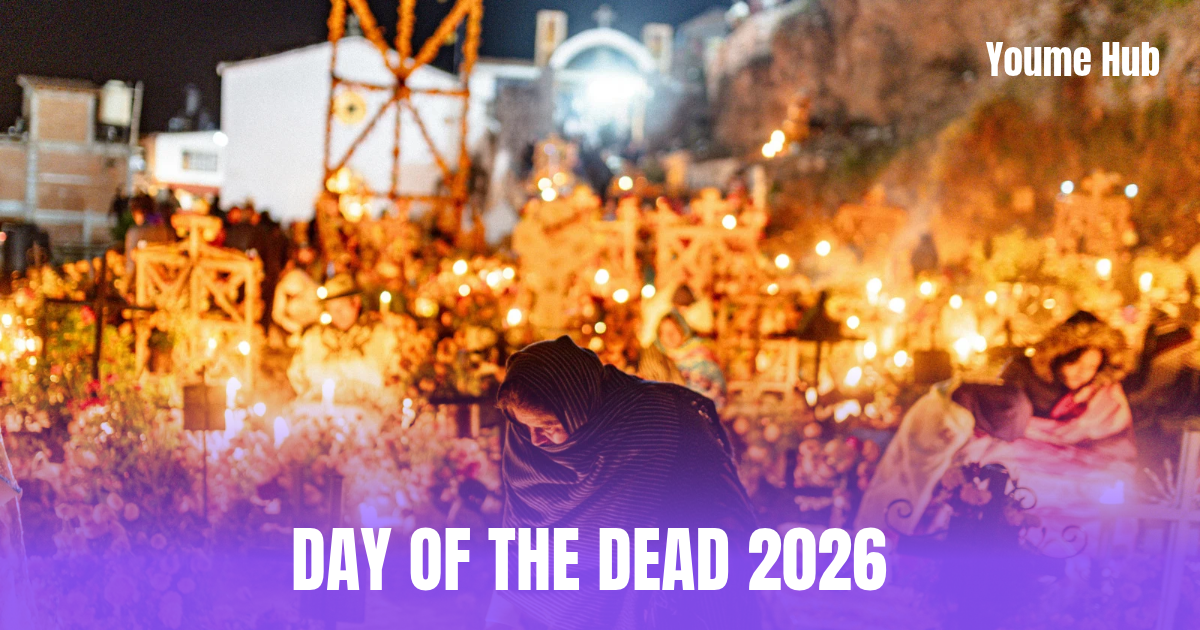
Day of the Dead — Día de los Muertos — runs November 1–2 every year, and in 2026 it falls on a Sunday and Monday, making a long weekend. It is often mistaken for a Mexican Halloween. It is not. This guide explains what each day honors, what every element of the altar means, where the tradition comes from, how it differs across Mexico, and how to mark it respectfully — including at home, outside Mexico.
November 1 and November 2 honor different dead
Sunday, November 1, 2026 — Día de Todos los Santos (All Saints’ Day) — honors children who have died, the angelitos (little angels). Altars on this day carry toys, sweets and white flowers.
Monday, November 2, 2026 — Día de los Fieles Difuntos (All Souls’ Day) — honors adults. Altars carry mole, tequila, pan de muerto, cigarettes, or whatever the person loved in life.
The core belief behind both days: once a year, the dead return home to visit, and the living welcome them. The altar — the ofrenda — is the invitation.
What every ofrenda element means
Photographs are the heart of the altar — the person being welcomed, front and center.
Cempasúchil, the Mexican marigold, gives off color and scent that guide spirits home. Petals are often scattered in a path from the street to the door so the dead can find their way in.
Candles light the way home. Copal resin incense is burned so its smoke carries prayers upward.
Pan de muerto, a sweet bread flavored with anise and orange, is baked for the occasion. Water quenches the thirst of a long journey, and salt purifies it.
The person’s favorite food and drink — mole, hot chocolate, mezcal, a favorite dish — are set out because the visit is treated like a homecoming, not a ceremony. Papel picado, perforated paper banners, decorate the altar in bright colors.
Why it is not Halloween
The mood tells the difference. A cemetery at midnight on Day of the Dead feels closer to a family dinner than a haunted house: food, music, conversation, humor. Death is treated as a member of the family — someone to feed and talk to — not something to fear or dress up as. Costumes and skeletons (calaveras, Catrinas) appear, but they are playful, not frightening.
October 31 is not Day of the Dead at all — it is the eve. Altars are finished, Oaxaca’s comparsas (parades) begin, Xoxocotlán holds its all-night vigil, and Mexico City’s Gran Desfile parade runs Saturday, October 31, 2026, at 2 pm along Paseo de la Reforma from Diana Cazadora to the Zócalo. It is free, with no tickets, and the Zócalo’s giant ofrenda is open October 29 to November 2.
Where the tradition comes from
The roots are Indigenous, predating the Spanish arrival, later blended with the Catholic All Saints’ and All Souls’ days. UNESCO recognizes Day of the Dead as Intangible Cultural Heritage of Humanity.
Ancient Mexicans believed the soul’s destination depended on the manner of death: a natural death led to Mictlan, the underworld; a water-related death to Tlalocan; death in combat or sacrifice — and women dying in childbirth — to Omeyocan, the paradise of the Sun; and dead children to Chichihuacuauhco, where a tree dripped milk to feed them. That old map of the afterlife still shapes which day honors whom.
Regional differences to get right
Day of the Dead is not identical across Mexico. In the Yucatán, the Maya tradition of Hanal Pixán (“food for the souls”) runs October 31 to November 2 with a different split: October 31 honors deceased children, November 1 adults, and November 2 all souls. Its signature dish is mucbipollo (also called pib), a large tamal baked underground, served with atole, fruits and sweets. It is more intimate and home-centered than the big public vigils.
The most famous vigils are at Pátzcuaro, where the candlelit vigil on Janitzio Island runs through the night of November 1, and at Mixquic, whose candlelit cemetery fills on November 2. Oaxaca celebrates October 31 to November 2 with comparsas and vigils, and Puerto Vallarta runs its Festival de las Almas from October 28 to November 3.
One more wrinkle: in northern Mexico, Day of the Dead was largely unknown until the 20th century and spread as a national tradition through government educational policy from the 1960s onward.
How to mark it outside Mexico
You do not need to travel to honor the day. Build a small ofrenda at home: a photo, a candle, marigolds if you can find them (any orange flower works in a pinch), a glass of water, and the person’s favorite food or drink. The point is remembrance, not perfection.
US celebrations are easy to join: San Antonio’s Muertos Fest at Hemisfair runs October 24–25, free, with more than 80 altars and two processions; Seattle’s Catrinas Festival runs October 31 to November 1; Washington, DC’s Día de los Muertos at The Wharf is Sunday, November 1, 4–7 pm, with a lantern procession; and the Figge Museum in the Quad Cities holds a Family Fiesta on Sunday, November 1, noon to 5 pm, with free admission.
Visiting respectfully
If you visit a cemetery or vigil in Mexico: watch first, ask before photographing people or altars, and leave Halloween-style behavior — scares, costumes meant to frighten — at home. You are a guest at a family gathering, and the families there will usually welcome you if you behave like one.
FAQ
When is Day of the Dead 2026? November 1–2, 2026. November 1 honors deceased children (angelitos); November 2 honors adults.
Is Day of the Dead Mexican Halloween? No. It is a family remembrance tradition with food, music and humor — closer to a family dinner than a haunted house.
What goes on an ofrenda? A photo, marigolds, candles, copal incense, pan de muerto, water, salt, and the person’s favorite food and drink. Children’s altars add toys and sweets.
What is Hanal Pixán? The Yucatán’s Maya version, October 31 to November 2, with a different day split (children October 31, adults November 1, all souls November 2) and the underground-baked mucbipollo.
Can I celebrate Day of the Dead outside Mexico? Yes — a small home ofrenda with a photo, candle and favorite food is the heart of it, and many US cities hold free public celebrations.
Sources
- https://roavi.com/blog/when-is-day-of-the-dead-2026
- https://whatwherevacay.com/blog/day-of-the-dead-oaxaca-2026-first-timers-guide
- https://www.mexicotravelandleisure.com/blog/day-of-the-dead/
- https://www.wetravel.com/i/69d15b862f18450718cacf42